
Crypto`s always had this problem where the value swings wildly, f.e. Bitcoin can jump 10% in a day, which makes it useless for actually paying for stuff. Stablecoins are the fix: crypto tokens designed to hold a steady value, usually pegged 1:1 to the dollar. You get the speed and programmability of crypto without the rollercoaster.
By 2026 it`s a $300 billion+ market, and it`s stopped being just a trading tool, it`s turning into actual financial infrastructure.
There are three main types:
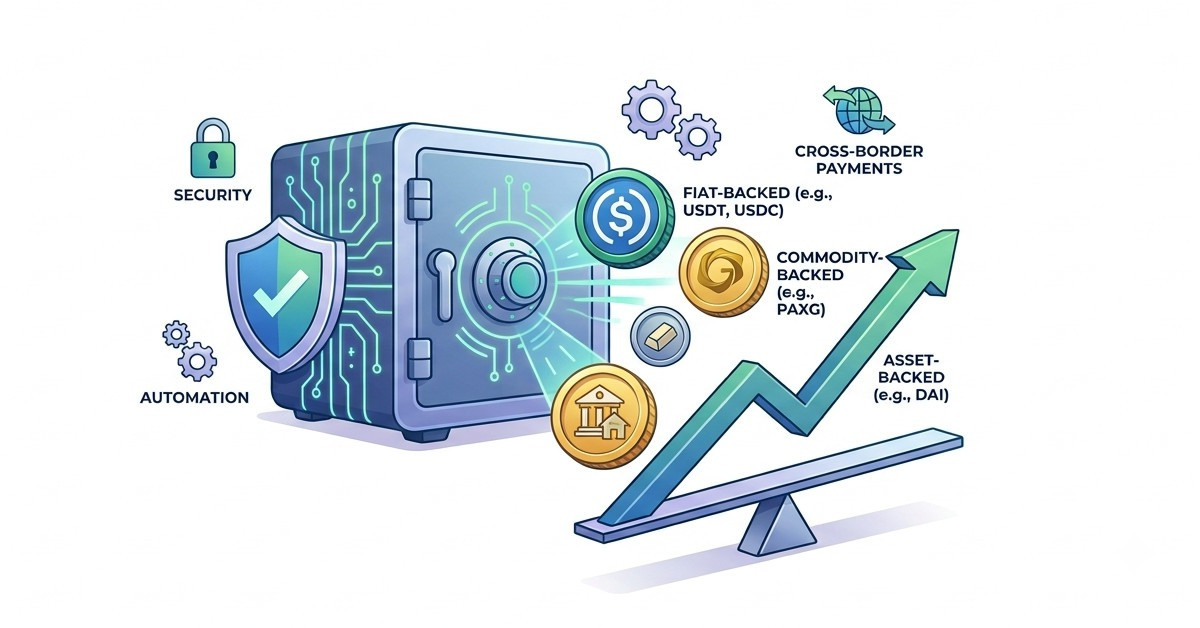
Backed by real cash - every token is backed by an actual dollar sitting in reserve somewhere (a bank, government bonds, etc). USDT (Tether) and USDC (USD Coin) dominate this space, over 90% of the market.
Backed by other crypto - like DAI, where you lock up more crypto value than what you`re minting, as a buffer since crypto prices move around.
Algorithmic - no real collateral, just code and incentives trying to hold the peg. This category took a massive credibility hit after TerraUSD collapsed in 2022.
What people actually use them for
Cross-border payments. Normal wire transfers take days and cost real money in fees. Stablecoins settle in minutes, any time, for basically nothing. Stripe, Visa, and Mastercard already support USDC directly.
Getting around unstable local currencies. In places like Argentina or Venezuela, people take part of their pay in USDT so it doesn`t lose value to inflation overnight.
AI agents paying for things. As AI systems start managing corporate cash or supply chains, they need a payment rail that doesn`t need a human clicking "approve." Stablecoins work for that.
Upsides and downsides
- Pros
Cheap, fast, doesn`t require a bank account. Freelancers on Upwork/Fiverr have used it to avoid the 5-10% that traditional banking fees eat up.
- Cons
If the company backing the coin screws up, it can de-peg, lose its dollar value. Case in point: when Silicon Valley Bank collapsed, USDC dropped to about 88 cents because Circle had reserves stuck in that bank. It recovered once things got sorted, but it showed these coins are only as safe as the banks holding the money behind them. There`s also regulatory risk and the usual crypto risks - hacks, lost keys, bugs.
Where regulation stands
The EU`s MiCA rules now require issuers to hold fully liquid, segregated reserves and ban interest-bearing stablecoins. In the US, legislation like the GENIUS Act is pushing toward more oversight, transparency, and licensing requirements.
One weird side effect: to back all these coins, companies like Tether and Circle have become some of the biggest buyers of US Treasury debt, holding more than a lot of actual countries do. So stablecoins are quietly helping fund US government spending. There`s also concern that if people in developing countries switch en masse to digital dollars, their local governments lose real control over their own economies.
Stablecoins went from being a niche thing crypto traders used to park money, to something that`s now actually used to move real money around the world.